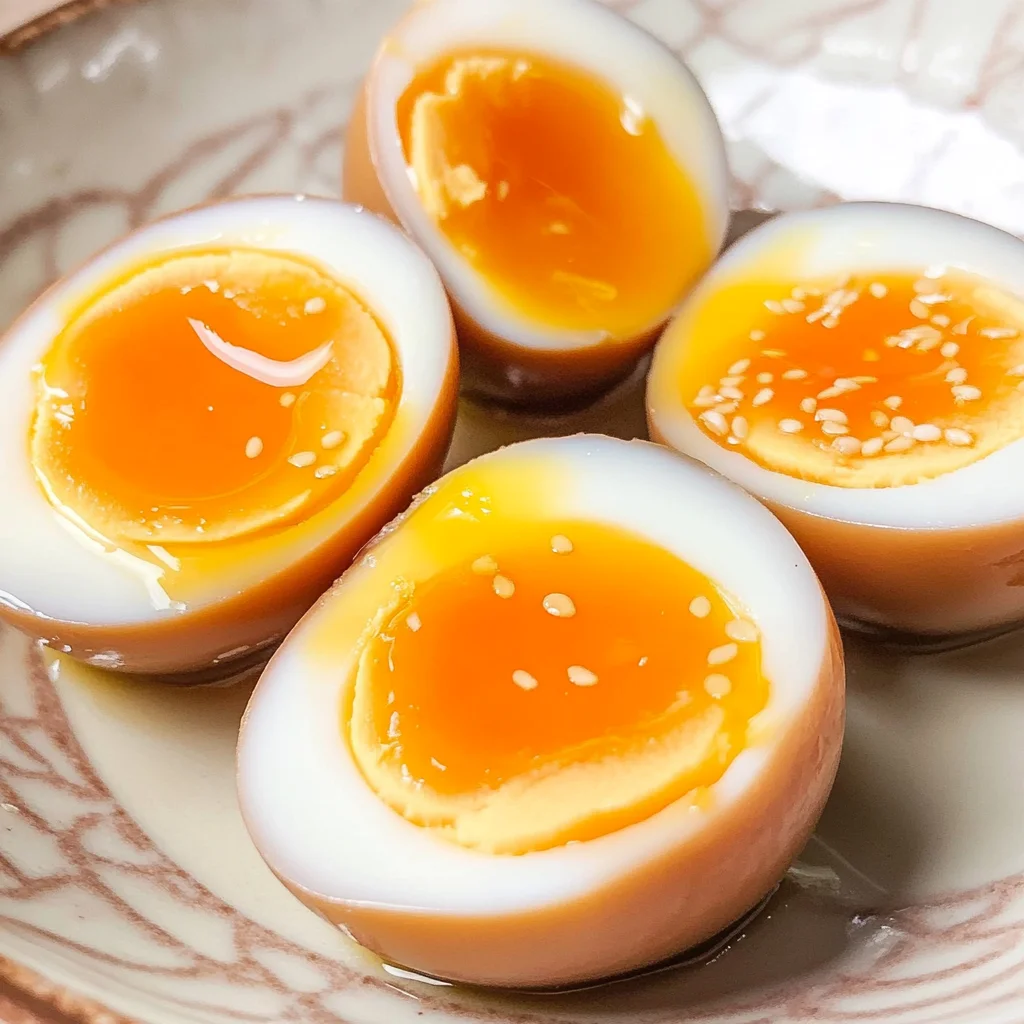
Ramen eggs, or ajitama, are a delightful addition to any meal. These soft-boiled eggs infused with a sweet and savory soy marinade bring a unique flavor that enhances ramen dishes and serves as a fantastic snack or side dish. Their jammy yolks and umami-rich taste make them irresistible for various occasions, from casual lunches to special dinners.
Why You’ll Love This Recipe
- Quick and Easy: With just a few simple steps, you can create delicious ramen eggs in no time.
- Versatile Use: Enjoy them in ramen, as a snack, or as a tasty side dish to complement your meals.
- Flavorful Profile: The sweet and savory marinade provides a burst of umami that elevates any dish.
- Make Ahead: These eggs can be marinated in advance, making them perfect for meal prep.
- Beautiful Presentation: Their glossy appearance adds an appealing touch to any plate.
Tools and Preparation
To prepare your ramen eggs perfectly, you will need some essential tools. Having the right equipment makes the process smoother and more enjoyable.
Essential Tools and Equipment
- Pot for boiling
- Bowl for ice water
- Measuring cups
- Mixing bowl or marinating container
Importance of Each Tool
- Pot for boiling: A sturdy pot is essential for ensuring even cooking of the eggs.
- Bowl for ice water: This helps cool the eggs quickly and stop the cooking process.
- Measuring cups: Accurate measurements ensure the marinade’s balance of flavors.
- Mixing bowl or marinating container: This is necessary for combining ingredients and marinating the eggs effectively.

Ingredients
To make these delectable ramen eggs, gather the following ingredients:
For the Eggs
- 6 large egg (see note)
- Vinegar (optional for boiling eggs)
For the Marinade
- ½ cup soy sauce (light sodium)
- ¼ cup water
- ¼ cup mirin
- 2 tablespoons granulated sugar
How to Make Ramen Eggs (Ajitama)
Step 1: Boil the Eggs
Bring a pot of water to a boil over medium-high heat. Carefully place the eggs into the boiling water. Let them cook for exactly 6 minutes to achieve that perfect soft-boiled texture. If desired, add vinegar to the water; this can make peeling easier later on.
Step 2: Shock in Ice Water
Once 6 minutes have passed, remove the eggs from the pot and immediately transfer them to an ice bath. Let them sit in cold water until completely cooled, which typically takes about 15 minutes. This step not only halts further cooking but also helps with peeling.
Step 3: Make the Marinade
While your eggs cool down, prepare the marinade. In a mixing bowl or marinating container, combine soy sauce, water, mirin, and sugar. Stir well until all sugar has dissolved.
Step 4: Marinate the Eggs
After cooling, gently crack and peel each egg under running water if needed to remove shell fragments. Place peeled eggs into your prepared marinade. Make sure they are fully submerged; if not, rotate them occasionally during marination. Allow them to soak in the fridge for at least 8 hours—overnight is best!
Step 5: Serve and Enjoy!
Your ramen eggs can now be enjoyed! They’re perfect in bowls of ramen but also make excellent snacks or sides. If you have leftovers, remember to remove them from the marinade after 12 to 36 hours based on your seasoning preference.
Enjoy creating these delicious Ramen Eggs (Ajitama) and delight in their rich flavor!
How to Serve Ramen Eggs (Ajitama)
Ramen eggs, or ajitama, are incredibly versatile and can elevate any meal. They add a burst of flavor and a beautiful touch to a variety of dishes. Here are some delightful ways to serve them.
In Ramen
- Enjoy ramen eggs nestled in a steaming bowl of ramen for a rich flavor experience. Their soft yolks complement the broth beautifully.
As a Snack
- Serve ramen eggs as a quick snack, perfect for those craving something savory and satisfying. A sprinkle of sesame seeds adds an extra touch.
In Salads
- Slice the eggs and toss them into salads for added protein and flavor. They work especially well in Asian-inspired salads with sesame dressing.
With Rice Dishes
- Pair ramen eggs with rice bowls or donburi for a tasty twist. The marinade enhances the rice’s flavor, making each bite delicious.
On Toast
- Create a unique open-faced sandwich by placing sliced ramen eggs on buttered toast, topped with avocado or fresh greens.
For Meal Prep
- Use marinated ramen eggs in your weekly meal prep for quick meals. They keep well in the fridge and can enhance many dishes.
How to Perfect Ramen Eggs (Ajitama)
Achieving the ideal ramen egg requires attention to detail. Here are some tips to ensure your ajitama turns out perfectly every time.
- Timing is crucial: Boil the eggs for exactly 6 minutes for that perfect soft center; adjust time slightly based on egg size.
- Ice bath is essential: Shock the boiled eggs in ice water immediately after cooking to stop further cooking and ease peeling.
- Use good quality soy sauce: A lighter soy sauce enhances flavor without overpowering the dish.
- Marinate overnight: For best results, let the eggs soak in the marinade overnight for deeper flavor infusion.
- Rotate occasionally: If not fully submerged, rotate the eggs during marination to ensure even seasoning.
- Store properly: Remove from marinade if not consumed within 36 hours to avoid overly salty flavors.
Best Side Dishes for Ramen Eggs (Ajitama)
Ramen eggs pair wonderfully with various side dishes that complement their rich umami flavor. Here are some delicious options:
-
Miso Soup
A warm bowl of miso soup offers a comforting contrast and balances the richness of ajitama perfectly. -
Edamame
Lightly salted edamame pods provide a healthy and crunchy side that pairs well with soft-boiled eggs. -
Nasu Dengaku (Miso-Glazed Eggplant)
Sweet miso-glazed eggplant complements the savory taste of ramen eggs while adding depth to your meal. -
Seaweed Salad
Refreshing seaweed salad adds a textural difference and a hint of oceanic flavor that works well alongside ajitama. -
Gyoza (Dumplings)
Crispy gyoza filled with vegetables or chicken serve as an excellent savory companion to your ramen dish. -
Pickled Vegetables
Tangy pickled vegetables provide acidity, cutting through the richness of the ramen eggs and enhancing overall flavor balance. -
Sautéed Bok Choy
Lightly sautéed bok choy adds freshness and crunch, making it an ideal green side dish next to ajitama. -
Cucumber Salad
A simple cucumber salad dressed in rice vinegar brings brightness and refreshment to your plate alongside ramen eggs.
Common Mistakes to Avoid
When making Ramen Eggs (Ajitama), there are a few common errors that can affect your results. Here are some mistakes to watch out for:
-
Not Timing the Boil Correctly: Overcooking the eggs will lead to hard yolks instead of the desired jammy texture. Stick to exactly 6 minutes for perfect results.
-
Skipping the Ice Bath: Failing to shock the eggs in ice water can lead to further cooking. Always cool them completely to stop the cooking process and make peeling easier.
-
Ignoring the Marinade Time: Shortening the marinade time can result in bland eggs. Aim for at least 8 hours, preferably overnight, for full flavor absorption.
-
Not Using a Container: Using an inappropriate container may cause uneven marination. Choose one that fits the eggs snugly and allows for complete submersion.
-
Forgetting to Rotate the Eggs: If your eggs aren’t fully submerged, neglecting to rotate them will lead to uneven seasoning. Remember to turn them occasionally during marination.

Storage & Reheating Instructions
Refrigerator Storage
- Store unpeeled Ramen Eggs in a sealed container.
- They can last up to 3 days in the refrigerator.
Freezing Ramen Eggs (Ajitama)
- It’s best not to freeze Ramen Eggs as they may lose their texture when thawed.
- If you do freeze, use an airtight container and consume within 1 month.
Reheating Ramen Eggs (Ajitama)
- Oven: Preheat to 300°F (150°C). Place eggs in a baking dish with water and heat for about 10 minutes.
- Microwave: Heat on low power in short intervals (10-15 seconds) until warm. Be cautious not to cook them further.
- Stovetop: Simmer water in a pot, then gently add eggs for about 2-3 minutes until warmed through.
Frequently Asked Questions
Here are some common questions about Ramen Eggs (Ajitama):
How long should I marinate Ramen Eggs (Ajitama)?
The eggs should be marinated for at least 8 hours, but overnight is best for maximum flavor.
Can I use different types of soy sauce?
Yes, you can use low-sodium or regular soy sauce based on your preference. Just adjust salt levels accordingly.
What is the ideal cooking time for soft-boiled eggs?
For perfectly soft-boiled Ramen Eggs (Ajitama), aim for exactly 6 minutes in boiling water followed by an ice bath.
Can I customize my marinade?
Absolutely! Feel free to add garlic, ginger, or chili flakes for additional flavors in your marinade.
Final Thoughts
Ramen Eggs (Ajitama) are a delightful addition to any meal, enhancing dishes with their sweet and savory flavor profile. They make a fantastic side or snack and can easily be customized with various marinades. Give this recipe a try and enjoy these delicious treats!

Ramen Eggs (Ajitama)
Ramen Eggs (Ajitama) are a delightful and flavorful addition to any dish, enhancing your culinary creations with their sweet and savory soy marinade. These soft-boiled eggs, known for their jammy yolks, are not only a perfect accompaniment to ramen but also make for a delicious snack or side dish. With a beautiful glossy finish, they can elevate casual lunches or special dinners alike. Whether you’re enjoying them in a warm bowl of ramen or as part of a meal prep plan, these versatile eggs are sure to impress.
- Total Time: 21 minutes
- Yield: 6 servings 1x
Ingredients
- 6 large eggs
- ½ cup light sodium soy sauce
- ¼ cup water
- 2 tablespoons granulated sugar
Instructions
- Boil the Eggs: Bring a pot of water to a boil and gently add the eggs. Cook for exactly 6 minutes for a soft-boiled texture.
- Shock in Ice Water: Transfer the eggs to an ice bath for about 15 minutes to stop cooking.
- Make the Marinade: In a mixing bowl, combine soy sauce, water, and sugar; stir until dissolved.
- Marinate the Eggs: Peel the cooled eggs and submerge them in the marinade in the fridge for at least 8 hours or overnight.
- Serve and Enjoy: Ramen eggs can be served with ramen, as snacks, or featured in salads.
- Prep Time: 15 minutes
- Cook Time: 6 minutes
- Category: Snack
- Method: Boiling
- Cuisine: Japanese
Nutrition
- Serving Size: 1 egg (50g)
- Calories: 70
- Sugar: 1g
- Sodium: 350mg
- Fat: 5g
- Saturated Fat: 1.5g
- Unsaturated Fat: 3g
- Trans Fat: 0g
- Carbohydrates: 3g
- Fiber: 0g
- Protein: 6g
- Cholesterol: 180mg